
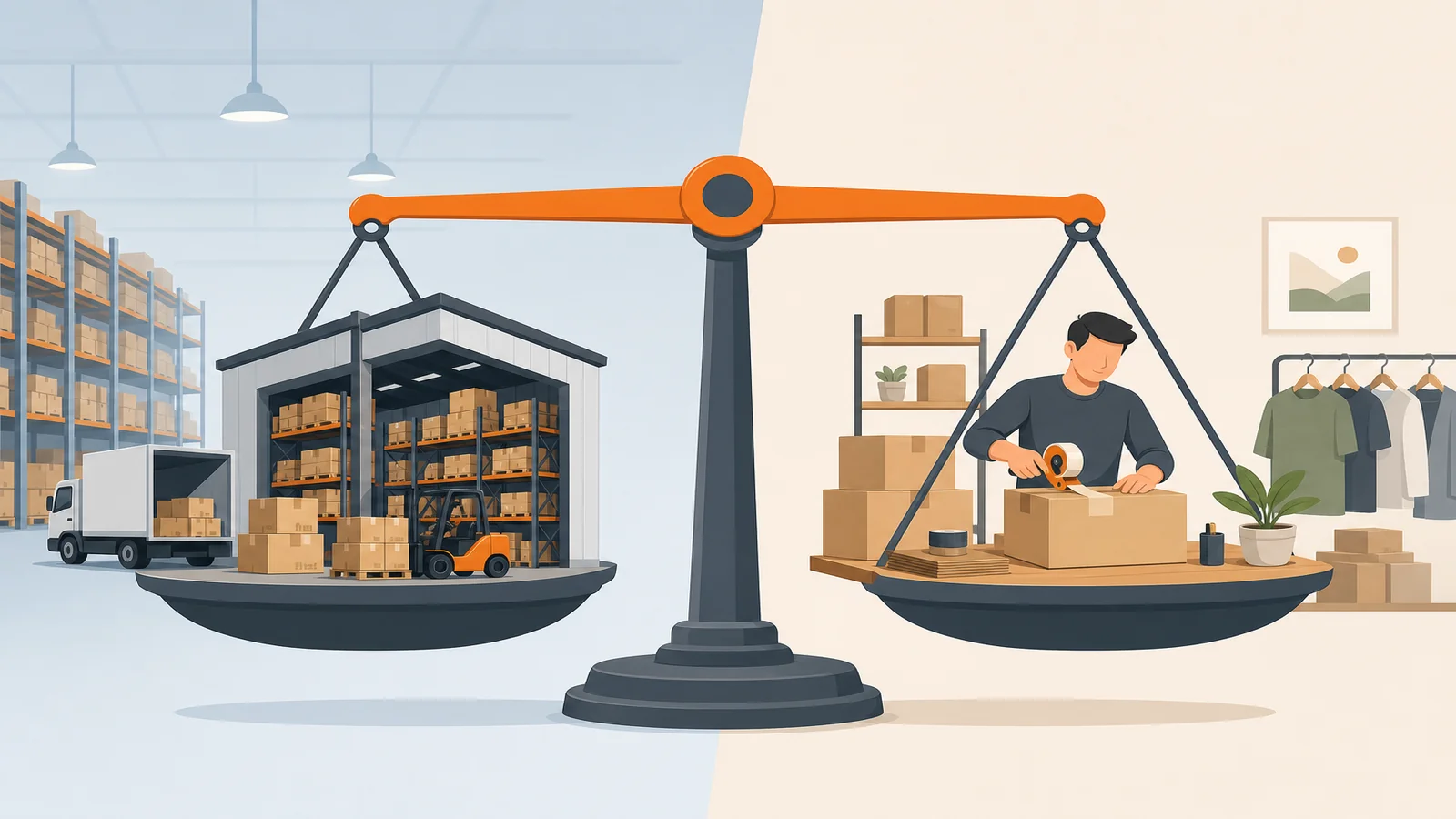
The Amazon FBA vs FBM in 2026 debate comes down to math and operational capacity — not loyalty to one fulfillment badge. FBA (Fulfillment by Amazon) handles storage, packing, shipping, and returns. FBM (Fulfilled by Merchant) means you ship from your own warehouse or 3PL. Each path changes fees, Buy Box odds, and how much control you retain.
FBA vs FBM: Quick Comparison
- Prime eligibility — FBA includes Prime badge automatically; FBM requires Seller Fulfilled Prime (SFP) qualification
- Buy Box — FBA listings typically win more often due to fulfillment metrics Amazon trusts
- Fees — FBA adds fulfillment and storage; FBM adds shipping labor and carrier costs but skips FBA handling fees
- Control — FBM lets you manage packaging, inserts, and shipping speed directly
- Scalability — FBA scales without hiring; FBM requires logistics infrastructure as volume grows
A Decision Framework by Product Type
Run this checklist for each SKU — not your whole catalog at once. Mixed fulfillment strategies are normal for established brands.
- Calculate true margin after all fees (referral + fulfillment OR shipping + labor)
- Check size tier — oversize and bulky items often favor FBM if you have cheap freight
- Assess velocity — fast movers benefit from FBA's Prime conversion lift
- Evaluate return rate — high-return categories may cost more through FBA processing
- Consider seasonality — slow Q1 inventory in FBA accumulates storage fees
When FBA Wins in 2026
Standard-size products with steady velocity, price points where Prime matters, and categories where Buy Box competition is fierce almost always perform better on FBA. Small, lightweight items in the standard tier especially — FBA's bulk shipping rates often beat what a solo seller negotiates with carriers.
New product launches also benefit from FBA because Prime eligibility lifts conversion during the critical review-building phase. Pair with FBA inventory management to avoid stockouts that kill launch momentum.
When FBM Makes More Sense
FBM wins when FBA fees consume margin on heavy, oversize, or low-price items. If your product sells for under $15 and barely clears the standard size tier, fulfillment fees may exceed what self-shipping costs from a regional warehouse.
Made-to-order, highly customized, or fragile products also suit FBM — you control QC and packaging without Amazon's prep requirements. Seller Fulfilled Prime remains an option for high-volume FBM sellers who meet Amazon's delivery performance standards, though qualification is strict.
Hybrid catalogs are smart. Hero SKUs on FBA for Prime conversion; oversized or low-margin SKUs on FBM. Amazon allows mixed fulfillment per ASIN.
Amazon's fulfillment by merchant overview covers FBM setup requirements. For fee comparisons, see our FBA fees 2026 guide.
Frequently Asked Questions
Is FBA or FBM better for new Amazon sellers in 2026?
Most new sellers launching standard-size products benefit from FBA because Prime eligibility improves conversion and simplifies logistics. FBM suits sellers with existing warehouse operations or products where FBA fees exceed self-shipping costs.
Does FBM hurt Buy Box eligibility?
FBM sellers can win the Buy Box but face tougher competition against FBA offers with similar pricing. Strong seller metrics, competitive pricing, and Seller Fulfilled Prime help — but FBA still holds an advantage in most categories.
Can I use both FBA and FBM for the same product?
You choose one fulfillment method per ASIN at a time, but your catalog can mix FBA and FBM across different SKUs. Many brands run hero products on FBA and oversized or low-margin items on FBM.
Pick the right fulfillment mix
Share your SKU list and we'll recommend FBA, FBM, or hybrid — product by product, not generic advice.
Compare FBA vs FBM Costs →